


Why Strong Crop Prices Dont Always Mean Strong Farm Profits

A high crop price can look like good news from the road. From the farm office, it can look very different.
That is the lesson facing many U.S. farmers and ranchers as fall begins. Strong commodity prices may help revenue, but revenue is only one side of the ledger. Diesel, fertilizer, irrigation, hay, interest, repairs, and hired labor all have a say in whether a season actually pays.
The pressure is especially sharp for small, beginning, and first-generation producers. These farms often have less working capital, fewer long-term supplier relationships, and less room for a bad surprise. A larger farm may be able to spread costs across more acres or more head. A newer operation may have to make every acre and every animal carry its weight.
Three stories deserve close attention this fall: expensive fuel and fertilizer, drought stress, and tight cattle supplies. Each one matters on its own. Together, they point to a simple but serious reality. Good planning may be more valuable than fast expansion.

Fuel and fertilizer costs are cutting into the price rally
Harvest takes fuel. So does planting, spraying, irrigation, hauling grain, feeding livestock, moving hay, running refrigeration, and delivering food.
That means a jump in diesel prices does not stay in one line of the budget. It spreads across the whole operation. A grain farm feels it in fieldwork and trucking. A livestock farm feels it in feed delivery, hay production, and water hauling. A specialty crop farm may feel it through irrigation, cooling, and refrigerated transport.
Reuters reported in September that U.S. farmers were facing record diesel prices during harvest, with some operations absorbing much higher daily fuel bills. The exact impact varies by region and farm type, but the business problem is the same. When energy costs rise quickly, a strong selling price may not protect profit.
Fertilizer adds another layer of risk. Potash, nitrogen, and phosphate prices are tied to global production, shipping, trade rules, natural gas markets, and geopolitical events. The United States has discussed a potential agreement to purchase potash from Belarus as a way to lower fertilizer costs for American farmers. Whether that type of deal creates real savings or not, it shows how much farmers depend on input markets they do not control.
The farm gate price may be local. The input bill is often global.
For a beginning farmer, that can be frustrating. A new producer may build a crop plan around an expected margin, then watch the margin shrink before planting or harvest. The crop price did not fall. The cost floor rose.
What to check before expanding acres
A stronger market can make expansion tempting. More acres, more rented ground, more cattle, more equipment, more production. But expansion only helps if the added production pays after added costs.
Before taking on more acres or livestock, build budgets around current numbers, not last year’s numbers.
Useful checks include:
Calculate fuel by enterprise rather than treating it as one general farm expense.
Update crop and livestock budgets with current diesel, fertilizer, feed, repairs, and interest costs.
Compare bulk fuel buying, supplier contracts, and custom-hire options before buying more equipment.
Build a contingency margin into each production estimate.
Know the price, yield, or rate of gain needed to break even.
This is where farm business planning becomes practical, not academic. A budget is not just paperwork for a lender. It is a warning system.
A producer cannot control global fertilizer trade or diesel markets. But a producer can know which crop, field, or livestock group is most exposed when costs move.
Drought is turning revenue questions into survival questions
Drought changes the math fast.
A crop farmer may still see a good price on paper, but price cannot sell bushels that never grew. A rancher may see strong calf prices, but drought can raise feed costs, reduce pasture days, force early weaning, or push herd liquidation. Irrigated farms may have a buffer, yet pumping water costs money and depends on water access.
The impact is not limited to one state, although certain regions often draw the most attention. The Southern Plains, parts of the West, and areas of the Corn Belt can all face moisture stress in different ways. In places where the Texas drought affects pasture and hay supplies, the cattle market can tighten even more because ranchers have fewer low-cost feed options.
Drought also creates timing pressure. Waiting too long to make a feed or culling decision can leave a farm with fewer choices. Hay may get more expensive. Pasture may decline further. Livestock may lose condition. Crop insurance deadlines or forage program rules may come into play.
The hard part is emotional as well as financial. Selling cows from a herd built over years is not the same as selling grain. Cutting a crop for silage instead of waiting for grain harvest may feel like giving up on the season. Still, drought rewards early decisions more than hopeful delays.

What drought planning should include
Drought planning should start before the most painful choice is the only choice left.
A clear plan can include:
A pasture trigger point Decide when forage is too short to keep grazing without long-term damage.
A feed price limit Know the maximum hay or feed cost that still makes sense for each livestock group.
A culling order Rank animals before a crisis, using age, productivity, health, and genetics.
A water plan Check wells, ponds, tanks, hauling options, and backup sources before they fail.
A crop backup plan Know when chopping, grazing, baling, or abandoning a crop may be better than chasing a low yield.
The goal is not to predict the weather. The goal is to avoid making every decision at the worst possible moment.
For small farms, that may mean sharing equipment with neighbors, lining up custom haying early, or working with a lender before cash flow gets tight. For first-generation farmers, it may mean asking more experienced producers how they set drought triggers. The best time to learn those rules is before the pasture is gone.
Tight cattle supplies are supporting prices but raising risk
The cattle market has been shaped by tight supplies, drought-driven herd reductions, and strong demand at different points in the supply chain. When fewer cattle are available, prices can strengthen. That can look like a welcome break for ranchers who have carried high feed, fuel, land, and interest costs.
But high cattle prices create their own risk.
Replacement females cost more. Feeder cattle cost more. Backgrounding and finishing animals require more capital. A mistake is more expensive when the animal costs more on day one. If feed prices rise or gains disappoint, the margin can disappear even in a strong market.
This is why Agriculture News September 2026: Drought, Diesel and Cattle Markets should be read as one connected business story, not three separate headlines. The cattle price may be strong because supplies are tight. Supplies may be tight because drought forced herd reductions. Drought also raises feed costs. Diesel raises the cost of hay, trucking, water hauling, and feed delivery. Fertilizer affects forage production. One market pulls on the next.
That connection matters for anyone following agriculture news 2026, farming news, cattle market 2026, Texas drought, diesel prices farmers are paying, fertilizer costs, beginning farmer choices, and farm business planning.

What cattle producers should watch
Strong cattle prices can encourage expansion, but expansion should match cash flow, forage, and risk tolerance.
Key questions include:
Can the farm carry higher replacement costs without using all available working capital?
Is there enough forage if drought lasts longer than expected?
What happens if calf prices soften before sale day?
Are feed costs locked in, estimated, or unknown?
Does the operation have enough water and fencing for added animals?
Will added cattle require added labor at the wrong time of year?
A young rancher may be better served by improving pregnancy rates, grazing management, water systems, or marketing before adding more head. More cattle can create more revenue, but they also create more exposure.
The same idea applies to stocker operators and small feeders. Buying high-priced animals can work, but the margin must be visible before the trailer backs up to the chute. A strong market is not a substitute for a written budget.
The real story is margin, not price
Farm profit is not built from price alone. It comes from the difference between what the farm receives and what it spends to produce, store, haul, feed, finance, and sell.
That sounds basic, but high markets can blur the view. A farmer may focus on gross revenue per acre. A rancher may focus on price per hundredweight. Those numbers matter, but they do not answer the most important question.
What is left after the bills?
A simple margin review can reveal problems before they become losses. That review does not need to be complicated. It needs to be honest.
Use current numbers for:
Cost area | Why it matters now |
Fuel | Diesel affects harvest, hauling, irrigation, hay, and feed delivery. |
Fertilizer | Global supply and trade policy can change local prices quickly. |
Feed and forage | Drought can raise costs and reduce available grazing days. |
Interest | Higher borrowing costs make inventory and expansion more expensive. |
Repairs | Older equipment may cost less to own but more to keep running. |
Labor | Seasonal needs can rise when weather shortens the work window. |
The table is not a replacement for a full budget. It is a starting point for asking better questions.
For example, a corn grower may see an attractive cash bid but need to subtract higher drying, trucking, fuel, fertilizer, land, and interest costs. A cow-calf producer may sell calves into a strong market but face expensive hay, higher replacement costs, and pasture recovery expenses. A vegetable grower may receive good wholesale prices but spend more on irrigation fuel, cooling, packaging, and delivery.
In each case, the headline price tells only part of the story.
Practical moves for small and beginning farmers
Small and beginning farmers do not always have the same tools as established operations. They may not have large storage capacity, long supplier history, paid-off equipment, or deep cash reserves. That does not mean they have no options.
It means decisions need to be more precise.
Start with enterprise budgets. Separate each crop, livestock group, or sales channel. If pastured poultry, beef cattle, hay, and vegetables all share one checking account, it can be hard to know which enterprise is helping and which one is quietly draining cash.
Track cost per unit. That might mean cost per acre, cost per bushel, cost per pound of gain, cost per bale, or cost per market box. The right unit depends on the farm, but the habit is the same.
Set decision dates. Do not wait until stress forces action. Pick dates for reviewing pasture, feed inventory, fuel use, crop yield outlook, and cash flow.
Talk to suppliers early. Ask about price protection, delivery schedules, bulk buying, and alternatives. The goal is not always the lowest price. Reliability has value, especially during harvest or drought.
Use custom work when it protects cash. Owning equipment can make sense, but custom hire may be safer when acres are limited or interest costs are high.
Protect working capital. Cash gives options. Fast expansion often consumes cash right when the farm needs flexibility.
A strong price is useful only if the farm can keep enough of it after costs.
This is informational only and not financial advice. Major farm decisions should be reviewed with a lender, accountant, Extension specialist, or trusted adviser who understands the operation.
A stronger fall plan starts with the break-even number
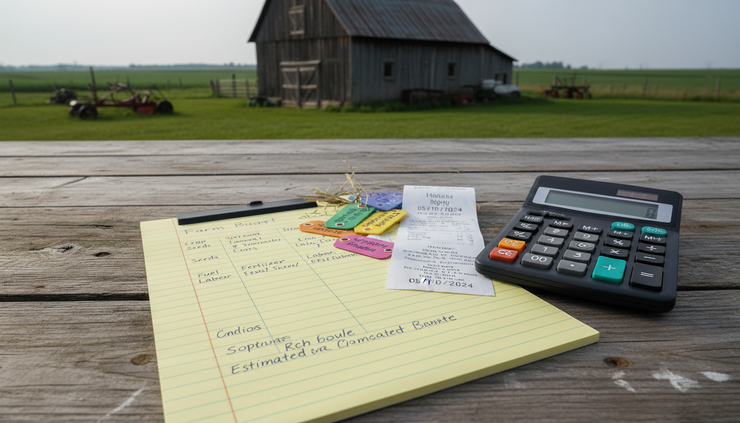
The best next step is simple. Find the break-even number before making the next big commitment.
For crop farms, that may mean the yield and price needed to cover seed, fertilizer, fuel, chemicals, land, drying, hauling, labor, repairs, insurance, and interest. For livestock farms, it may mean the sale weight and price needed to cover purchase cost, breeding cost, feed, pasture, hay, veterinary care, trucking, death loss, labor, and financing.
Once the break-even point is clear, decisions become less emotional.
A rented field either has room for profit or it does not. A group of calves either fits the budget or it does not. A fertilizer program either pays under realistic yield goals or it needs adjustment. A piece of equipment either lowers total cost or adds pressure.
Strong markets can create real opportunity. They can help farms pay down debt, rebuild cash reserves, repair worn equipment, and invest in long-term soil, water, and herd health. But high prices can also hide thin margins until the bills arrive.
This fall, the farms in the strongest position may not be the ones chasing the most acres or the most head. They may be the ones that know their costs, protect their cash, and make decisions before the market makes decisions for them.


Comments